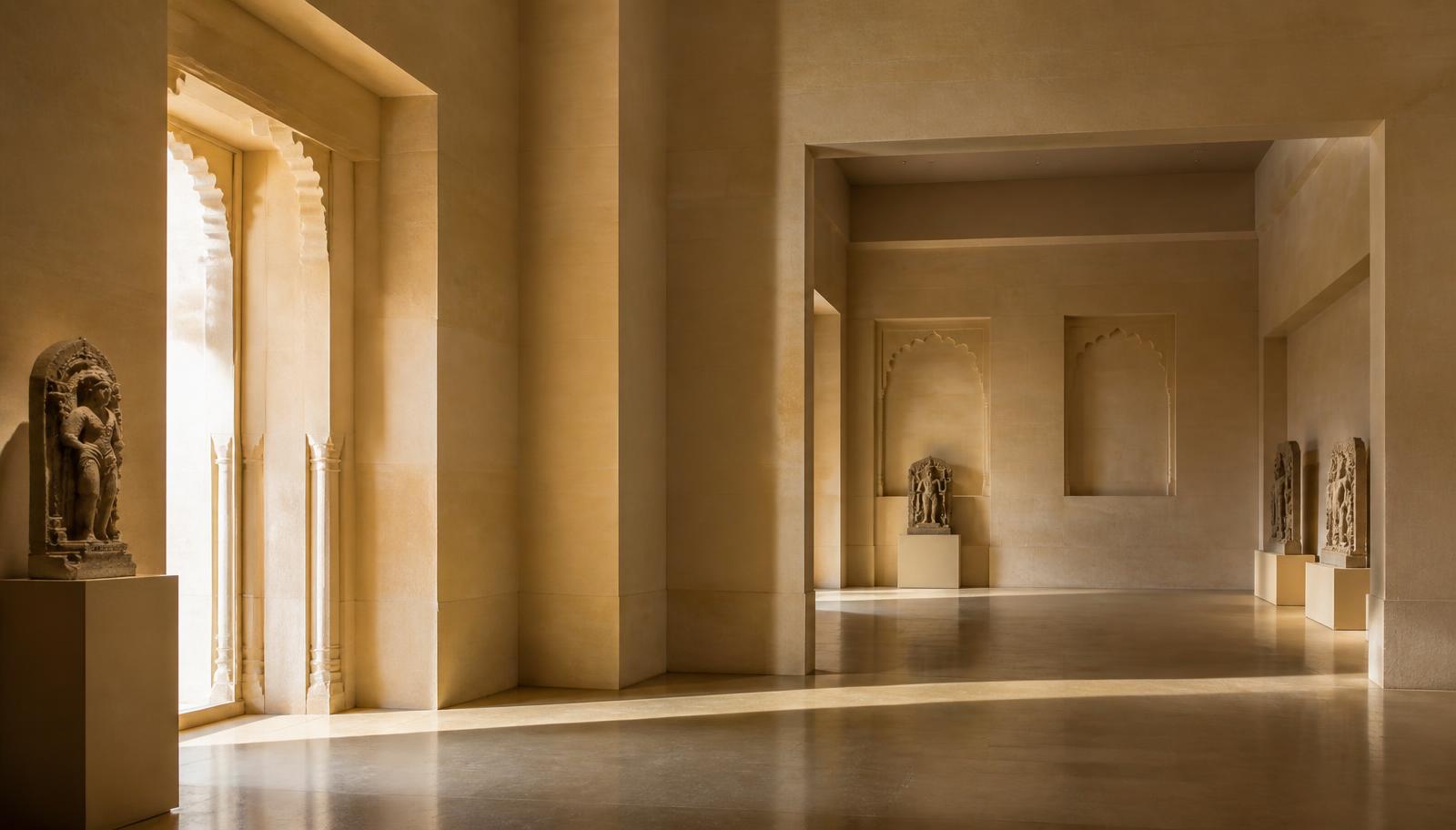
Mainpuri Cultural Centre
Transforming cultural research into meaningful visitor experiences through storytelling, spatial design and immersive media.
A cultural centre built around many stories.
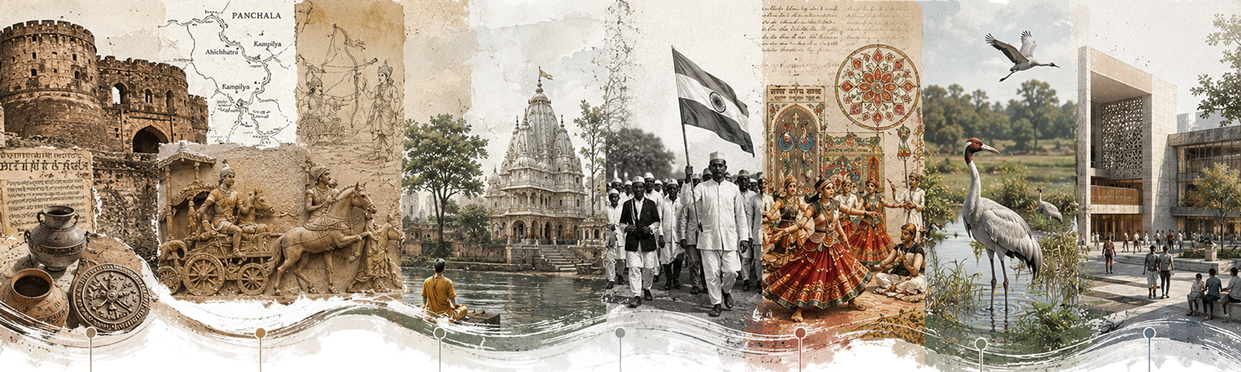
The Mainpuri Cultural Centre is a proposed cultural and tourism destination designed to preserve, interpret and celebrate the region’s history, mythology, spirituality, art, ecology and community narratives.
The challenge was not simply to display information, but to transform scattered cultural knowledge into experiences that visitors could understand, navigate and remember.
The project explores how research, storytelling, spatial design and interactive media can work together to create meaningful cultural experiences.
From scattered heritage to one visitor experience.
Mainpuri's heritage lives across historical records, religious sites, oral narratives, local traditions and cultural landscapes — each held by a different custodian, each in a different format. The design task was to organise those narratives into one coherent museum experience that stays accessible and engaging for a contemporary visitor.
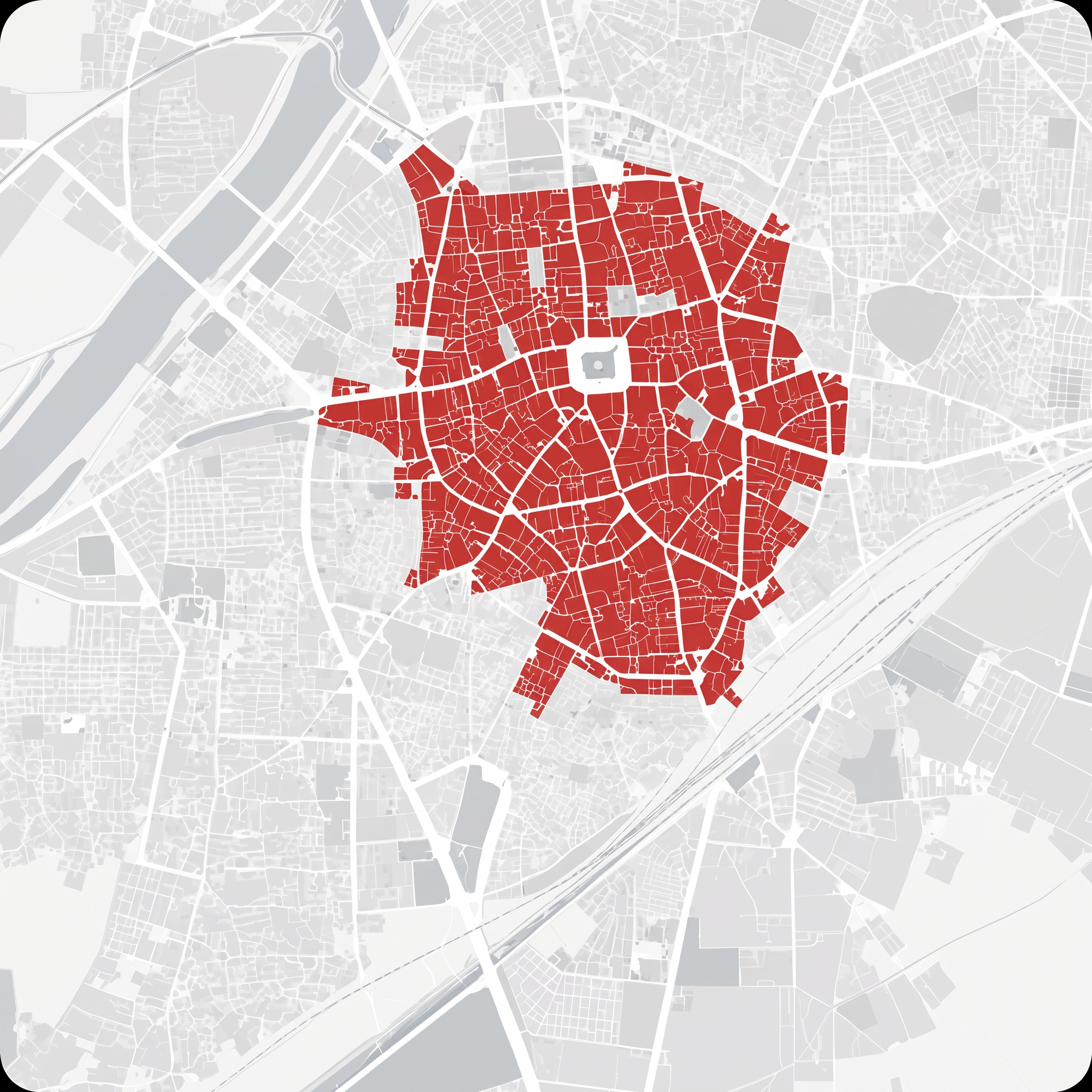
Where research became experience design.
As a Design Trainee and Associate Researcher at DoT Mavericks India, I contributed across research, content development and experience planning for the Cultural Centre.
My work involved studying cultural and historical narratives, organising information into meaningful themes, developing content structures and supporting visitor-centric experience planning across the proposed museum.
The project gave me an opportunity to bridge research and experiential design — translating complex cultural narratives into journeys, spaces and interactive experiences.
- Cultural & historical research
- Content structuring
- Narrative development
- Experience planning support
Understanding Mainpuri before designing for it.
Research was the foundation, not a preface. Sources included books, archival records, government publications, tourism reports, academic studies and digital resources.
- 01Historical research
- 02Mythological research
- 03Spiritual research
- 04Cultural research
- 05Ecological research
- 06Tourism research
- 01Historical investigation
- 02Cultural documentation
- 03Content analysis
- 04Thematic synthesis
- 05Experience opportunities
Turning information into a journey.
Findings were grouped into thematic narratives, then translated into a museum framework — so that content order and spatial order became the same decision.
- 01Research
- 02Themes
- 03Narratives
- 04Museum zones
- 05Visitor journey
- 06Experience opportunities
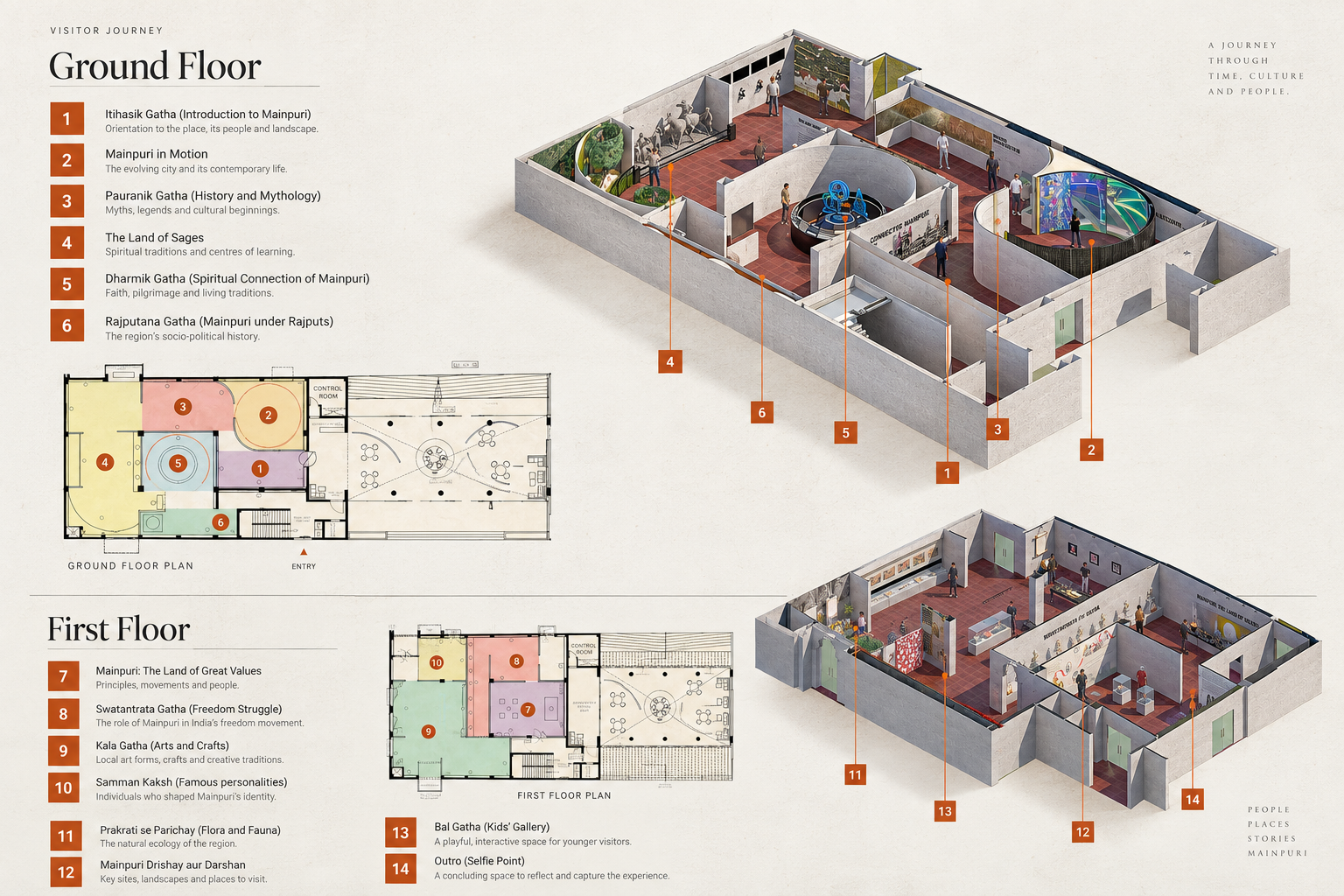
Fourteen zones, one cultural narrative.
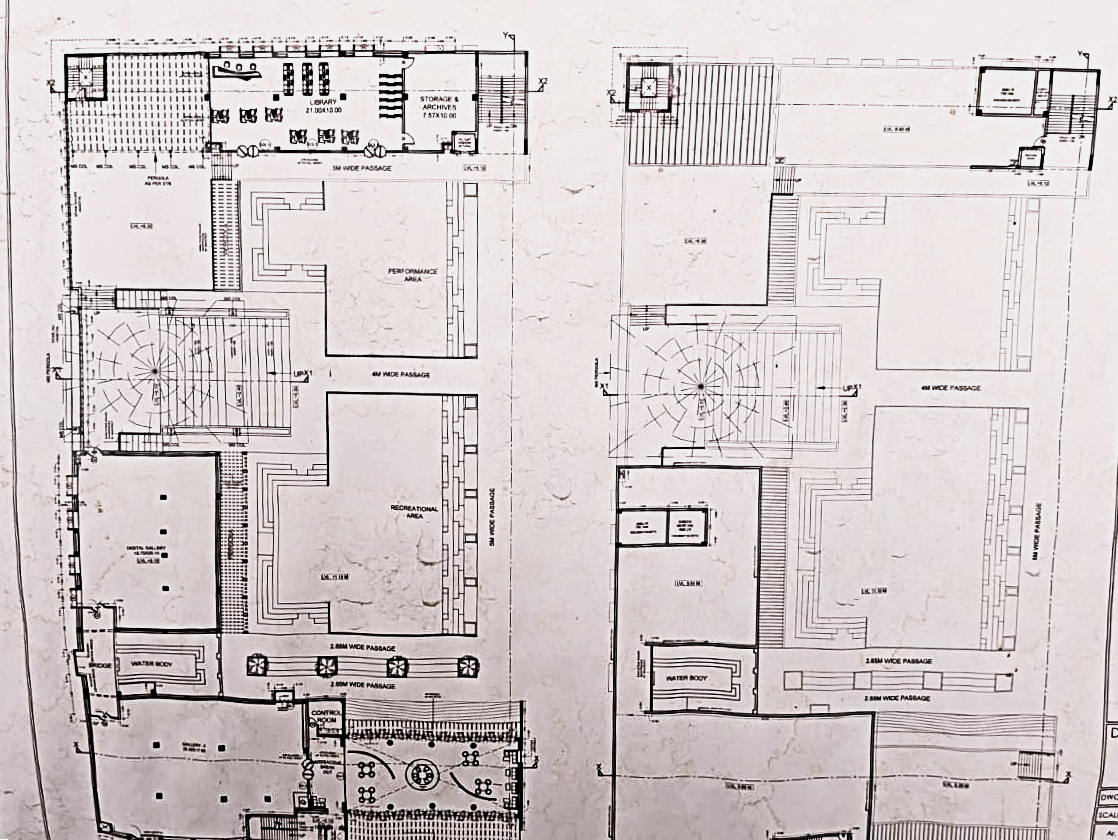
The Cultural Centre brings several dimensions of Mainpuri together through a sequence of museum experiences. The framework's purpose is continuity: a visitor should feel one story deepening, not fourteen subjects presented in turn.
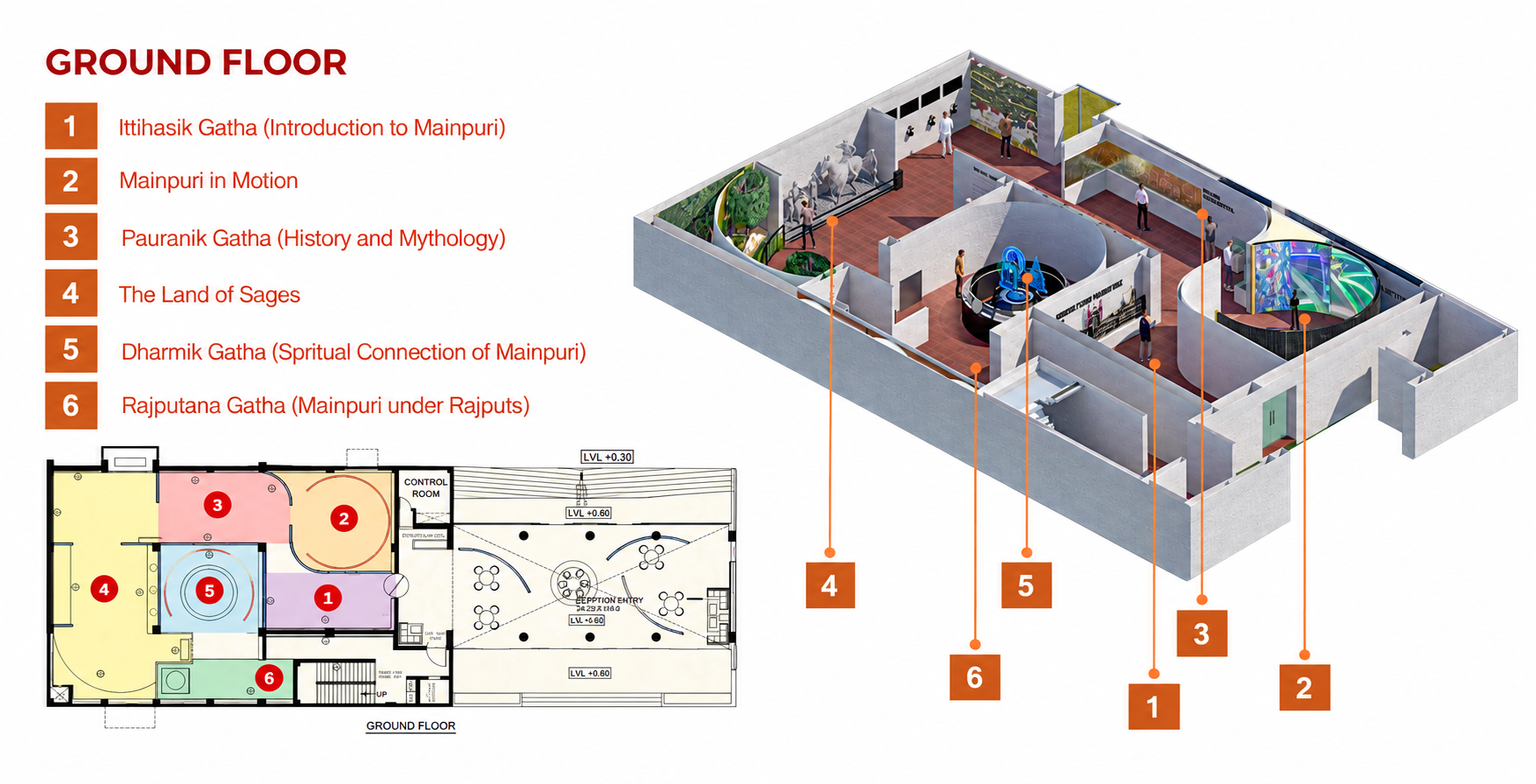
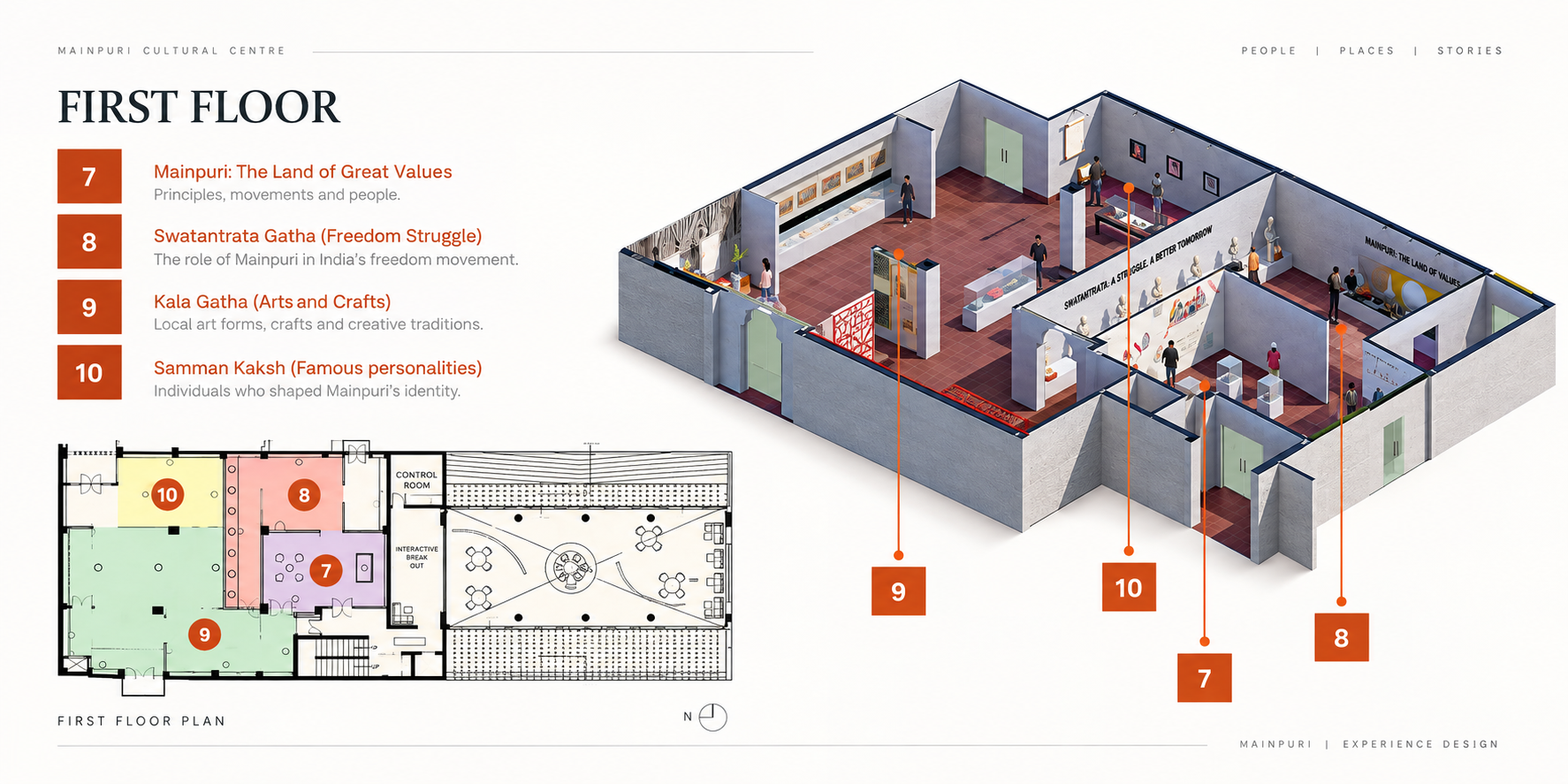
Designing the visitor journey.
The journey connects narratives and experience formats rather than treating each gallery as an isolated room. Pace, density and quiet are planned as deliberately as content.
- 01Arrival
- 02Orientation
- 03Discovery
- 04Interpretation
- 05Immersion
- 06Reflection
- 07Continuation
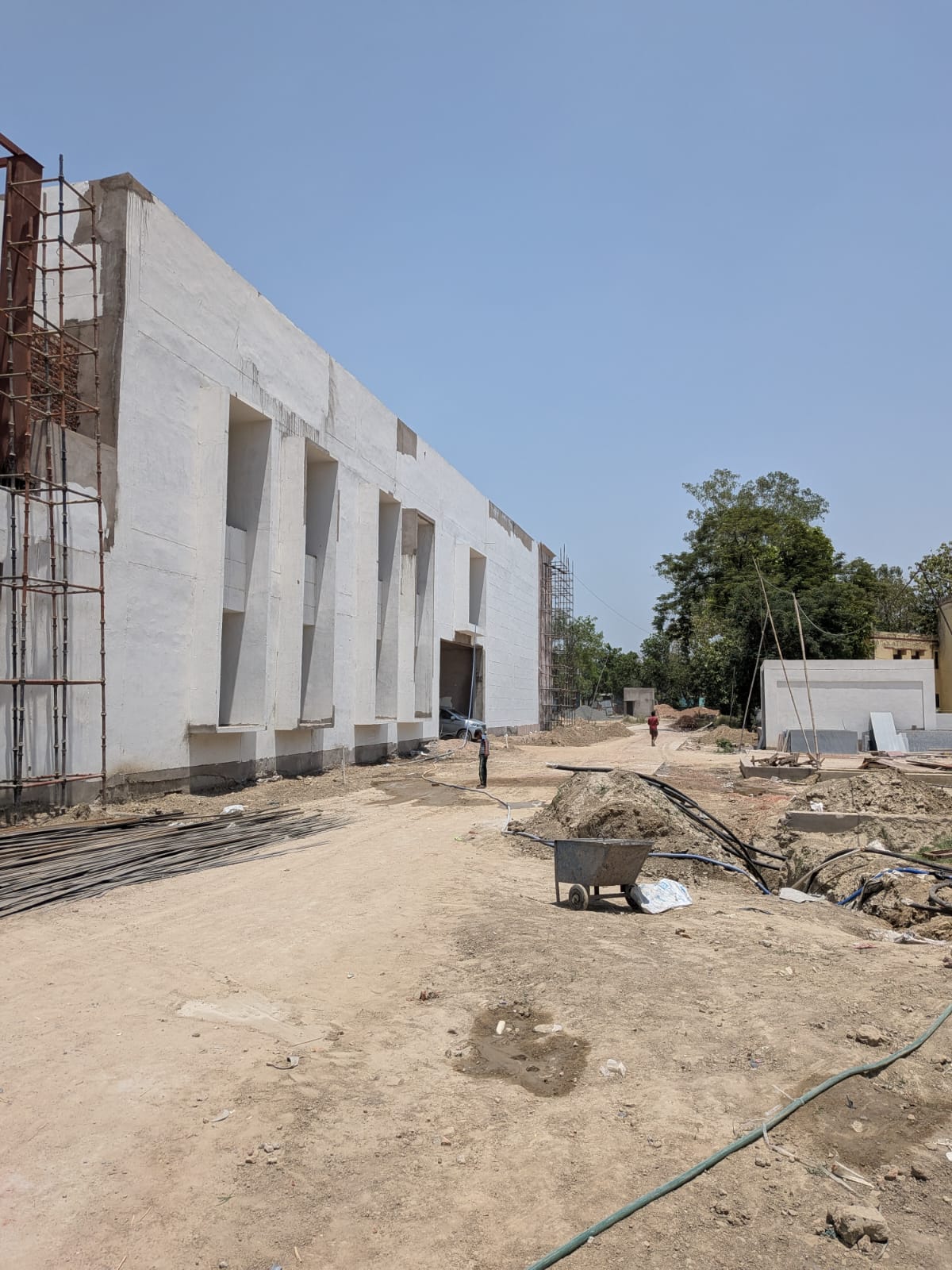
A project still in progress.
The Mainpuri Cultural Centre is an ongoing project. The physical site is under development, while experience and design work continues across stages.
What the project established.
Research foundation
Established a structured cultural research and narrative framework for the museum.
Experience framework
Translated research into museum zoning, visitor journeys and experiential opportunities.
Spatial storytelling
Developed a foundation for turning cultural narratives into spatial sequences and visitor moments.
What this project taught me
“Immersive design begins long before the technology — with context, research, narrative structure and a clear understanding of how people move through a story.”
This project strengthened my understanding of research-driven experience design and the difficulty of translating complex cultural narratives into accessible visitor experiences.
It continues to shape how I approach the relationship between research, space, interaction and storytelling.